
Motor control
Motor control simulator: DOL, star-delta and reversing starters
Motor starters are the bread and butter of industrial control. EDWartens Lab lets you build a direct-on-line starter, a star-delta starter and a reversing starter twice: once as a PLC program, and once as a wired 415 V panel.
Open the lab freeSee the whole lab
Free with a free EDWartens account. Runs in your browser. The lab is in beta.
Direct-on-line, the first starter
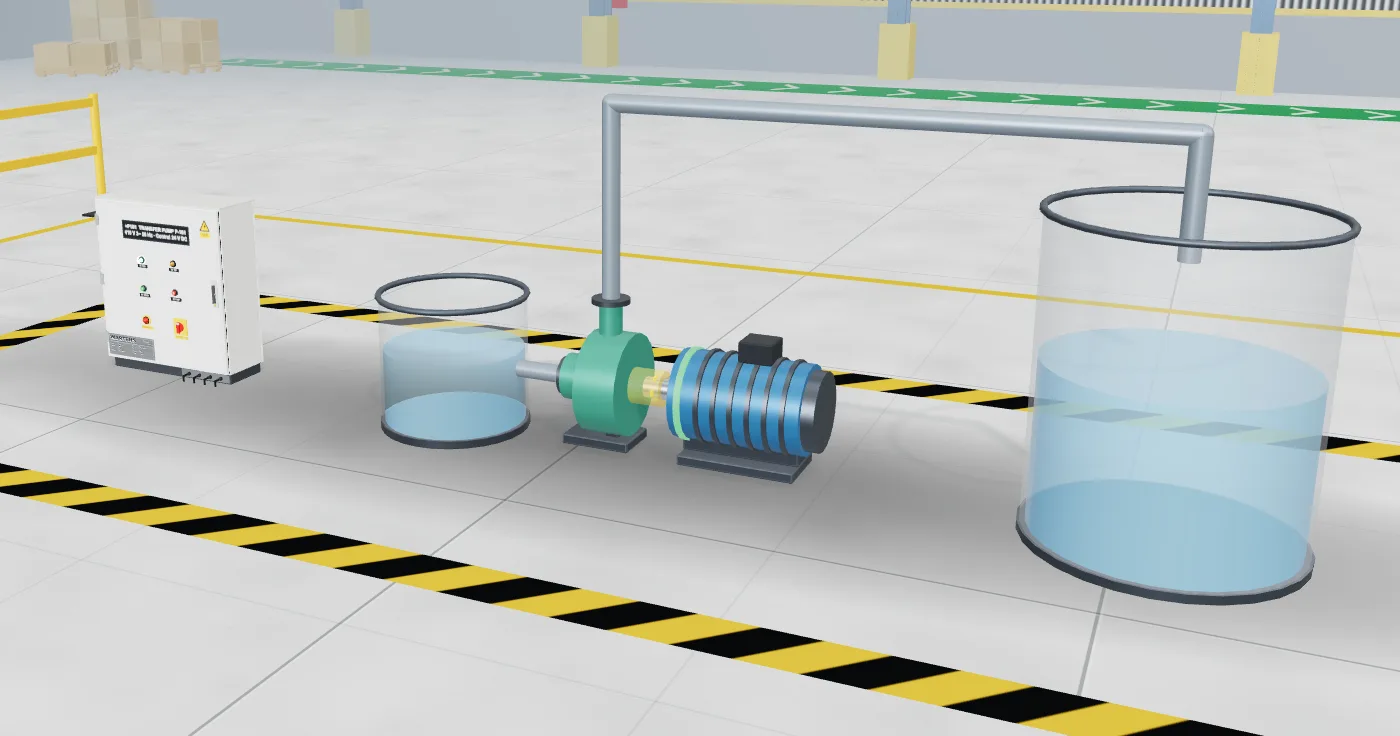
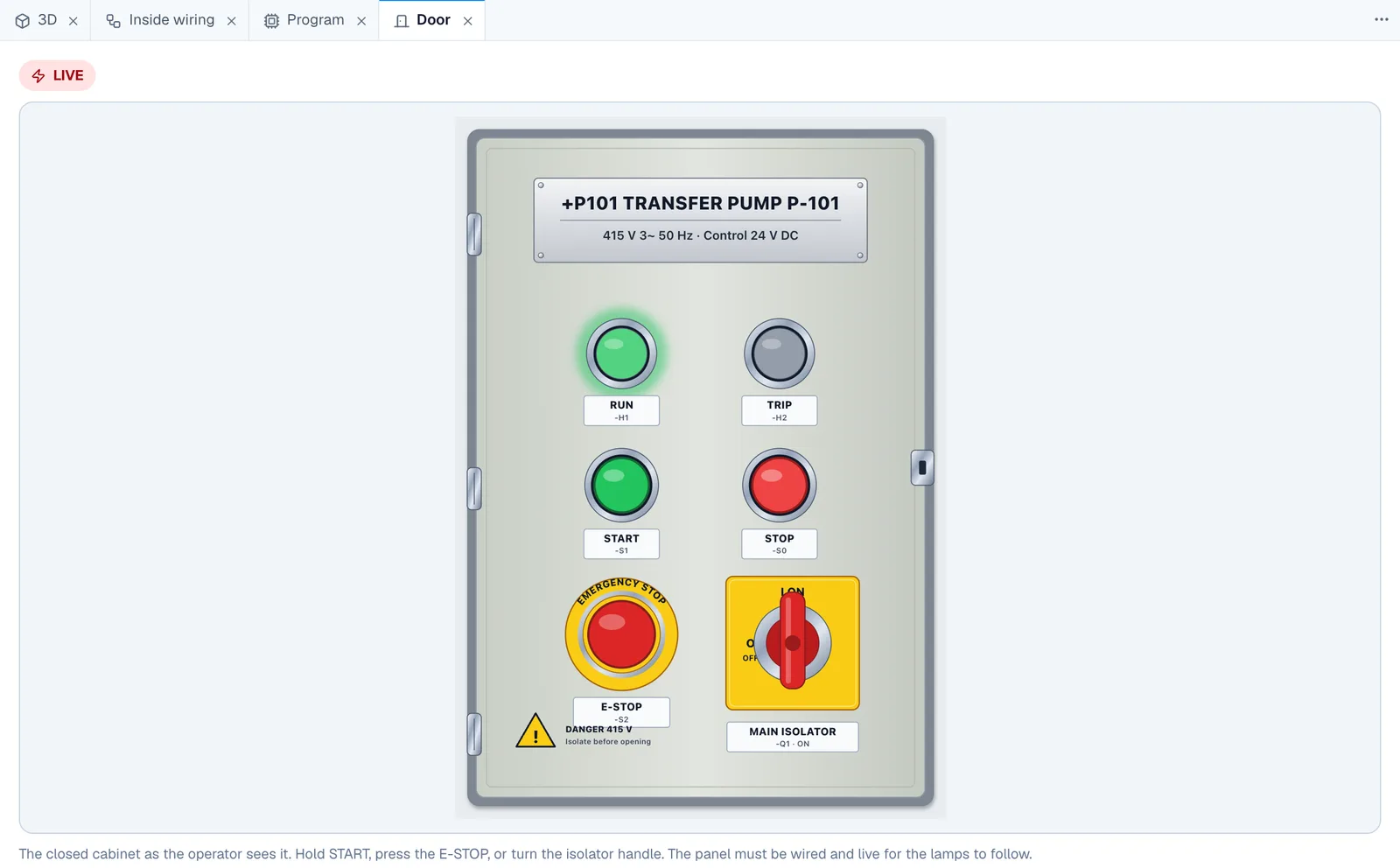
A DOL starter connects the motor straight to the supply through a contactor and an overload relay. In the lab you meet it in two ways. The PLC lab asks for a start/stop program with a seal-in, an emergency stop and an overload that trips. Panel Lab level 1 asks you to wire a 415 V pump starter with a 24 V PLC, then commission it.
Star-delta, to hold the starting current down
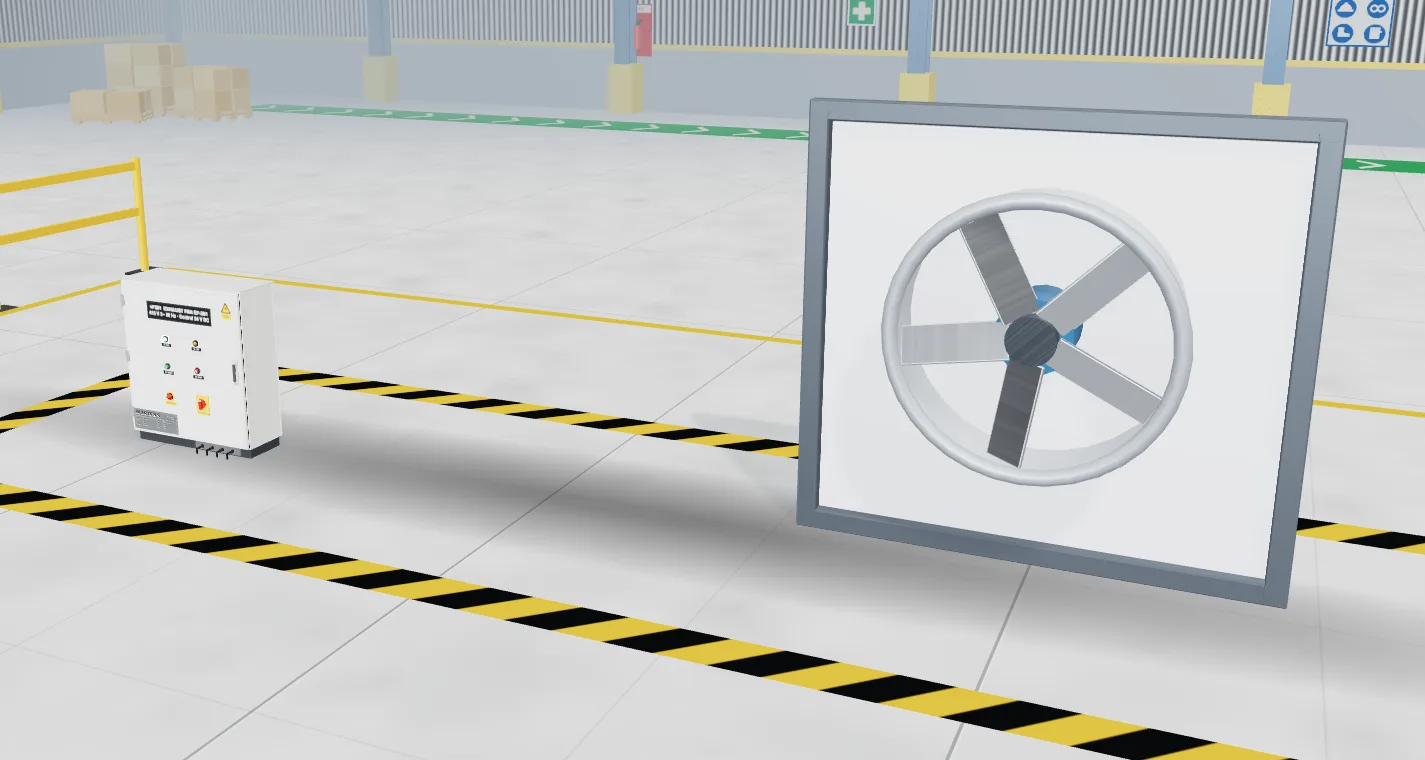
A star-delta starter starts the motor in star, then changes over to delta after a delay. It uses three contactors: main, star and delta. The star and delta contactors must never be closed together, so the changeover needs a dead gap. The PLC lab has a star-delta fan starter where you program the timed changeover and watch the starting current. Panel Lab level 3 has you wire an 11 kW exhaust fan starter with a hardwired interlock.
Forward and reverse with interlocks
A reversing starter swaps two phases using two contactors that must never close together. In the PLC lab you program the interlock and the dwell time before the motor may reverse. In Panel Lab level 4 you wire the reversing conveyor with a safety chain and a hardwired trip lamp, and the kit includes a phase rotation indicator for checking the phase order before you connect a motor.
Program it, wire it, then fault-find it
Seeing a starter in both forms is what makes it stick. The ladder shows the logic, the schematic shows the circuit, and the panel shows what happens when the two disagree. Level 2 of the Panel Lab then breaks a conveyor starter for you: one of eight faults, a different one each job, and you find it with a meter.
How it works
- Start with the DOL start/stop lab and write the seal-in and the overload trip.
- Move to star-delta and add the timed changeover with a dead gap.
- Add the interlock and the dwell time in the forward/reverse conveyor lab.
- Wire the same starters in the Panel Lab and commission them.
Labs to open for this
- Motor start/stop with overloadPLC lab · Foundation
- Star-delta fan starterPLC lab · Foundation
- Forward/reverse conveyorPLC lab · Foundation
- Commission the transfer-pump starterPanel Lab · Commissioning
- Commission the star-delta fan starterPanel Lab · Commissioning
- Commission the reversing conveyor starterPanel Lab · Commissioning
Browse all labs (free account needed to open them).
Questions people ask
Is there a free DOL starter simulator?
Yes. EDWartens Lab has a free direct-on-line starter in two forms: a PLC start/stop program on a simulated pump, and a wired 415 V pump starter in the Panel Lab. A free EDWartens account is required.
How does a star-delta starter work?
The motor starts with its windings in star, which lowers the voltage on each winding and the starting current. After a short delay the contactors change it to delta for running. A dead gap stops the star and delta contactors closing together.
How do I reverse a three-phase motor?
Swap any two of the three supply phases. A reversing starter does this with two contactors, interlocked so they can never close together, with a short pause before the motor changes direction.
Can I practise motor control circuits without a trainer kit?
Yes. The lab simulates the contactors, overload relays, wiring and PLC in the browser, so you can practise the logic and the wiring without buying a trainer. It prepares you for, but does not replace, work on real equipment.
Related guides
- Control panel wiring simulator
- Ladder logic simulator online
- Multimeter and fault-finding simulator
- EDWartens Lab: the free virtual PLC lab